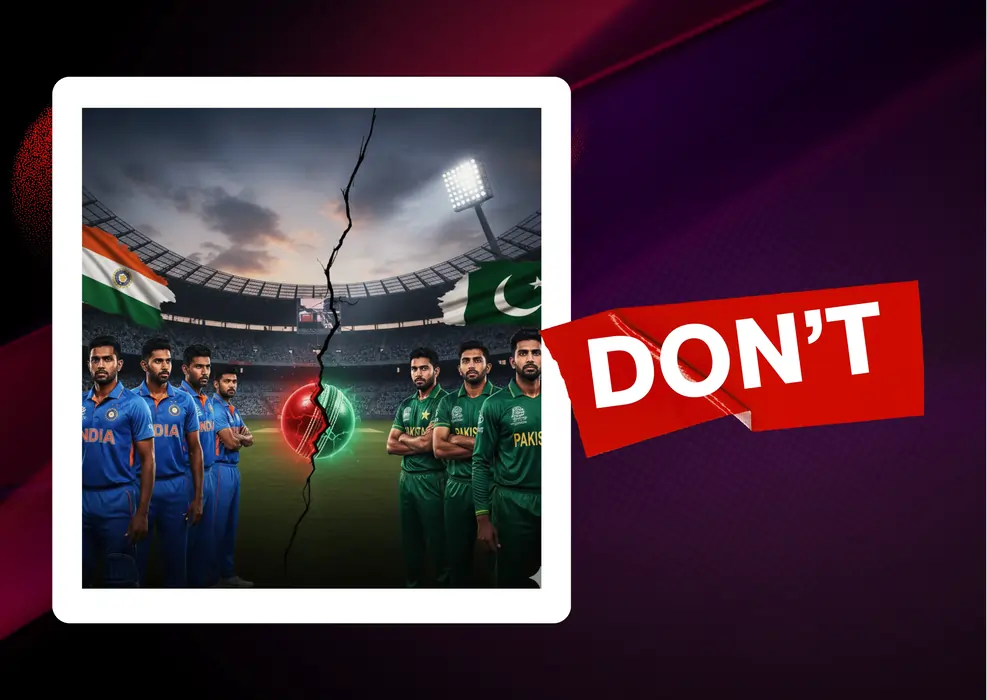

The cricket world is witnessing one of the most dramatic build-ups to a global tournament in recent memory. With the T20 World Cup set to begin on February 15 in Colombo, Pakistan has officially announced that it will boycott the group-stage match against India. This unexpected decision has triggered strong reactions worldwide, including a blunt response from former England star Kevin Pietersen.
Under Pietersen’s post, Indian fans sarcastically asked, “Will Pakistan boycott the final too—if they reach it?” That single comment perfectly captured the confusion, frustration, and humor mixed into the situation.
So, what exactly led to this chaos? Here’s the full story.
Why Pakistan Is Boycotting the India Match
Pakistan’s government made the announcement through its official X (Twitter) handle. Although the statement did not explicitly explain the reason, it is widely understood that Pakistan is acting in solidarity with Bangladesh, which earlier declared that it would not play the World Cup matches scheduled in India due to security concerns.
This stand by Pakistan has surprised fans, especially because:
- The India–Pakistan fixture is the most watched match in any ICC event.
- These matches generate massive revenue for the ICC and broadcasters.
- ICC has traditionally ensured both teams are placed in the same group since 2012 due to global demand.
With no bilateral series for almost 14 years due to political tensions, ICC tournaments remain the only stage for this high-voltage clash. Now, even that seems uncertain.
How This Controversy Started: A Timeline of Events
January 3
BCCI instructs Kolkata Knight Riders to release Bangladesh pacer Mustafizur Rahman amid rising diplomatic tensions between India and Bangladesh.
January 4
Bangladesh responds by blocking IPL security clearance for its players.
January 12
Bangladesh Cricket Board (BCB) writes to ICC requesting its T20 World Cup matches be shifted to Sri Lanka, citing security concerns—similar to the hybrid model used in the 2023 Asia Cup.
January 21
ICC rejects the request, giving Bangladesh a 24-hour deadline to confirm participation in India.
January 22
Emergency meeting held in Dhaka with Bangladesh squad and PCB representatives. Bangladesh decides to stand firm and not play in India.
January 24
PCB chairman Mohsin Naqvi publicly supports Bangladesh and states that Pakistan will also reconsider its participation.
January 26
Naqvi meets Pakistan PM Shehbaz Sharif. His earlier X post—where he accidentally changed the PM’s name—goes viral and draws heavy trolling.
February 1
Pakistan officially announces it will boycott the India match on Feb 15.
February 2
Pakistan captain Salman Agha says, “This decision is not ours; we can’t do anything about it.”
ICC’s Strong Reaction
Within three hours of Pakistan’s announcement, ICC released a stern statement:
- Calling it a decision that impacts the global cricket ecosystem.
- Asking PCB to reconsider immediately.
- Warning of severe long-term consequences.
Reports suggest that the ICC is prepared to impose:
- Strict disciplinary action against PCB
- Possible ban from the tournament
- Freezing Pakistan’s annual ICC revenue share of $34.5 million (₹316 crore)
- Liability for broadcaster losses worth ₹200+ crore, particularly for rights-holder Star & Jio
What Happens to Pakistan’s Campaign Now?
Pakistan is in Group A with:
- India
- Namibia
- Netherlands
- USA
With the India match being forfeited, Pakistan automatically loses 2 points, and their Net Run Rate also suffers, making qualification difficult. Their fixtures:
- Feb 7 – vs Netherlands
- Feb 10 – vs USA
- Feb 18 – vs Namibia
Fans worldwide are now wondering whether Pakistan might go ahead with the rest of the matches—or whether more boycotts are coming.
Cricket World Reacts with Heavy Criticism
Experts, former cricketers, journalists, and fans across nations have criticized Pakistan’s sudden boycott. Many argue that:
- Cricket should not be dragged into political disputes
- The India–Pakistan match is crucial for the sport
- PCB’s decision could damage its long-term cricketing future
Even Pakistani fans have expressed frustration that their team may be punished for political decisions beyond their control.
Final Thoughts
The India–Pakistan rivalry has always been more than just cricket. But this time, the off-field drama threatens to overshadow the entire T20 World Cup. As ICC pushes for a reconsideration and experts warn of financial and sporting consequences, all eyes are on PCB’s next move.
Will Pakistan reverse its decision?
Will ICC enforce strict action?
And most importantly—will the world witness another India–Pakistan clash, or is 2026 destined to break the tradition?
Only time will tell, but the cricket world is holding its breath.